Press Forward Saints

CALLED AND CHOSEN President James E. Faust Second Counselor in the First Presidency October 2005 General Conference

Those called, sustained, and set apart are entitled to our sustaining support.

Testimony of the Lords Holy Work Through President James E  James E Faust

My dear brethren of the priesthood, please accept our appreciation for all you do to carry forward the Lord’s work worldwide. I desire to speak about the sacred offices of those priesthood leaders who have been “called and chosen” to guide the Church in this day. This is a special year for at least two reasons: first, we are celebrating the 200th anniversary of the birth of the Prophet Joseph Smith this December, and second, President Gordon B. Hinckley celebrated his 95th birthday this past June. I testify that the Prophet Joseph Smith was called and chosen as the first prophet of this dispensation and that President Gordon B. Hinckley is the present prophet, seer, and revelator of this Church.

When Mike Wallace interviewed President Hinckley some years ago for the television program 60 Minutes, he said, “[People will say] this is a church run by old men.” To this, President Hinckley replied, “Isn’t it wonderful to have a man of maturity at the head—a man of judgment who isn’t blown about by every wind of doctrine?” So if any of you think the present leadership is too old to lead the Church, President Hinckley may need to give you some further counsel about the wisdom that comes with age!

Of the 102 Apostles called in this dispensation, only 13 have served longer than President Hinckley. He has served longer as an Apostle than Brigham Young, President Hunter, President Lee, President Kimball, and many others. It is wonderful to have his inspired leadership. Please forgive me for saying that I myself feel at times that I am standing on the edge of eternity. At age 85, I am the third oldest of all the living General Authorities. I have not sought this honor. I have just lived for it.

I believe that never before in the history of the Church has there been more unity than exists among my Brethren of the First Presidency, the Quorum of the Twelve, and the other General Authorities of the Church, who have been called and chosen and who are now guiding the Church. I believe there is ample evidence of this. The present leadership of God’s earthly kingdom has enjoyed the Savior’s guiding inspiration longer than any other group. We are the oldest group ever to lead the Church.

My association with some of these men for almost half a century qualifies me, I think, to state with confidence that my Brethren, without exception, are good, honorable, and trustworthy men. I know their hearts. They are the servants of the Lord. Their only desire is to labor in their great callings and build up the kingdom of God on earth. Our Brethren who are serving in this day and time are proven, tried, and true. Some are not as physically strong as they used to be, but their hearts are so pure, their experience so great, their minds so sharp, and their spiritual wisdom so deep that it is a comfort just to be in their presence.

I was humbled and overwhelmed to be called as an Assistant to the Twelve Apostles 33 years ago. A few days later President Hugh B. Brown counseled me that the most important thing I should do is to always be in harmony with my Brethren. President Brown did not elaborate. He just said, “Stick with the Brethren.” I interpreted that to mean that I should follow the counsel and direction of the President of the Church, the First Presidency, and Quorum of the Twelve. That resonated as something I wanted to do with all my heart.

Others may not agree with that counsel, but it warrants some consideration. I have concluded that spiritual guidance in large measure depends upon being in harmony with the President of the Church, the First Presidency, and the Quorum of the Twelve—all of whom are sustained, as they were today, as prophets, seers, and revelators. I do not know how we can expect to be in full harmony with the Spirit of the Lord if we are not in harmony with the President of the Church and the other prophets, seers, and revelators.

When I was a deacon, my father took me and my older brother to general priesthood meeting in the Tabernacle. I remember how thrilled I was to be in the presence, for the first time, of the prophet of God, President Heber J. Grant, and the other prophets and apostles. I listened intently to their messages and took the things they said into my heart. Over the years their subjects have been repeated many times. I expect that some of them will be repeated yet again in this conference. They are essential for our salvation, and we need the repetition.

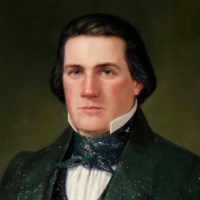
Since the beginning of the world, history has recorded many examples of those who have not been in harmony with the prophets. In the early days of our dispensation, several of the Twelve, to their regret, did not stay loyal to the Prophet Joseph Smith. One of these was Lyman E. Johnson, a member of the original Quorum of the Twelve who was excommunicated for unrighteous conduct. He later lamented his spiritual downfall. He said: “I would suffer my right hand to be cut off, if I could believe it again. Then I was full of joy and gladness. My dreams were pleasant. When I awoke in the morning my spirit was cheerful. I was happy by day and by night, full of peace and joy and thanksgiving. But now it is darkness, pain, sorrow, misery in the extreme. I have never since seen a happy moment.” He died in a sleighing accident in 1856 at the age of 45.

Lyman Eugene Johnson  Wilford Woodruff Papers Lyman E Johnson

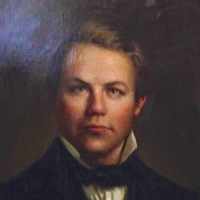
Luke S. Johnson was also called to the original Quorum of the Twelve in 1835. His spiritual resolve weakened over some financial speculation in 1837. Looking back later he said: “My mind became darkened, and I was left to pursue my own course. I lost the Spirit of God, and neglected my duty; the consequence was, that at a Conference held in Kirtland, September 3, 1837, … I was cut off from the Church.” By December 1837 he joined the apostates in publicly denouncing the Church and was excommunicated for apostasy in 1838. For eight years he had a medical practice in Kirtland. Then in 1846 he and his family returned to the fellowship of the Saints. Said he: “I have stopped by the wayside and stood aloof from the work of the Lord. But my heart is with this people. I want to be associated with the saints; go with them into the wilderness and continue with them to the end.” He was rebaptized in March 1846 and came west with the original company of pioneers in 1847. He died in Salt Lake City in 1861 in full fellowship at the age of 54.

Luke Johnson 18071861 Luke S Johnson

My counsel to the members of the Church is to support the President of the Church, the First Presidency, Quorum of the Twelve, and other General Authorities with our whole hearts and souls. If we do, we will be in a safe harbor.

President Brigham Young said he recollected many times the Prophet Joseph Smith saying that he “had to pray all the time, exercise faith, live his religion, and magnify his calling, to obtain the manifestations of the Lord, and to keep him steadfast in the faith.” All of us may expect some challenges to our faith. These challenges may come in different ways. You may not always like the counsel that the Church leaders give to you. They are not trying to be popular. They are trying to help us avoid the calamities and disappointments that come through disobedience to God’s laws.

We also need to support and sustain our local leaders, because they also have been “called and chosen.” Every member of this Church may receive counsel from a bishop or a branch president, a stake or a mission president, and the President of the Church and his associates. None of these brethren asked for his calling. None is perfect. Yet they are the servants of the Lord, called by Him through those entitled to inspiration. Those called, sustained, and set apart are entitled to our sustaining support.

I have admired and respected every bishop I have ever had. I have tried not to question their guidance and have felt that in sustaining and following their counsel I was protected against the “sleight of men, and cunning craftiness.” This was because each of these called and chosen leaders was entitled to the divine revelation that comes with the calling. Disrespect for ecclesiastical leaders has caused many to suffer spiritual weakening and downfall. We should look past any perceived imperfections, warts, or spots of the men called to preside over us and uphold the office which they hold.

Many years ago we used to have money-raising events in our wards to pay for the utilities and other local expenses and activities now paid by the general Church funds and the local unit budget allowance. We used to have bazaars, fairs, dinners, and other fund-raising activities. At that time my ward had a wonderful, devoted, committed bishop.

A member of a neighboring ward found that a dunking machine was a successful money-raising activity. Participants would pay to throw baseballs at a marked mechanical arm. Hitting the bull’s-eye would trigger a release, plunging the person sitting on the seat of the machine into a big basin of cold water. Our ward decided to use this machine, and someone suggested that more people would pay for balls to throw if the bishop would be willing to sit on the dunking seat. Our bishop was a good sport, and because he was responsible for raising the money, he willingly consented to sit on the dunking seat. Soon some began to buy balls and to throw them at the target. Several hit the mark, and the bishop was drenched. After half an hour of this, he began to shake with the cold.

While some of the people thought this was great fun, my father was very offended that the office of the bishop had been so belittled and held up to ridicule or even contempt. Even though the money raised was intended for a good cause, I can still remember feeling ashamed that some of our people did not show more respect for both the office and the man who had by night and day served us so well as our good shepherd. As holders of the priesthood of God, we should set the example of sustaining the leadership of the Church to our families, our friends, and our associates.

The holy scriptures as well as the local and General Authorities of the Church provide a safety net of counsel and guidance for the people of the Church. For example, all my life the Brethren have from this and other pulpits urged our people to live within their incomes, stay out of debt, and save a little for a rainy day, for rainy days always come. I have lived through times of great economic difficulty, such as the Great Depression and World War II. What I have experienced makes me afraid not to do what I can to protect myself and my family against the consequences of such catastrophes. I am grateful to the Brethren for this wise counsel.

The President of the Church will not lead the people of the Church astray. It will never happen. President Hinckley’s counselors sustain him fully, as do the Quorum of the Twelve, the Quorums of the Seventy, and the Presiding Bishopric. As a result, as I have said before, a special love and harmony exist in the presiding councils of the Church for our President and for each other.

The priesthood of God is a shield. It is a shield against the evils of the world. That shield needs to be kept clean; otherwise, our vision of our purpose and the dangers around us will be limited. The cleansing agent is personal righteousness, but not all will pay the price to keep their shields clean. The Lord said, “For many are called, but few are chosen.” We are called when hands are laid upon our heads and we are given the priesthood, but we are not chosen until we have demonstrated to God our righteousness, our faithfulness, and our commitment.

Brethren, this work is true. Joseph Smith saw the Father and the Son, and he heard and followed Their instruction. That was the beginning of this great work, the responsibility for which now rests upon us. I bear solemn witness of its divinity, in the name of Jesus Christ, amen.

ELDER SPENCER W. KIMBALL of the Council of the Twelve Apostles, April 1955 General Conference

A young Indian lad in my presence recently bore his testimony, and he said: "I am proud that I am a Navajo. I am proud, more proud, that I am a Mormon, and I am still more proud that I hold the priesthood," and that is the way I feel today in this great assembly on this anniversary. One hundred and twenty-five years ago six people gathered together in the first conference; and at this conference some ten sessions have filled the building to its capacity. I bear witness that the work that we are engaged in is the work of the Lord in all its comprehensiveness, and I am grateful that I am a member of the Lord's Church. I have prayed much that what I say this morning might be beneficial to someone.

And the Lord said, I am Jesus whom thou persecutest: it is hard for thee to kick against the pricks. (Acts 9:5.)

The Lord was speaking to the powerful figure, Saul of Tarsus, Paul of Christianity. I often wondered just what this meant. I found one authority who offered this:

. . . Those who kick at the goad, that stifle and smother the convictions of conscience, that rebel against God's truths and laws, that quarrel with His providences, that persecute and oppose His ministers, because they reprove them . . . and fly in the face of their reprovers, they kick against the pricks, and will have a great deal to answer for. (Commentaries by Henry M. Scott.)

A goad is defined as a spear or a sharp pointed stick used to sting or prick. The burro who kicks the sharp instrument with which he is being prodded is kicking at the pricks. His retaliation does little damage to the sharp stick or to him who wields it but brings distress to the foot that kicks it.

I well remember in my youth a neighbor who moved about for some days on crutches. He was evasive when asked the cause of his misfortune, but an ear witness told me, as he chuckled: "John stubbed his toe on a chair in the night and in his quick, fierce anger, he kicked the chair and broke his toe." The rocking chair rocked on and on, and perhaps smiled at the stupidity of man.

The first king of Israel quarreled with Providence. His stubbornness cost him his kingdom and brought forth the caustic denunciation from his prophet:

For rebellion is as the sin of witchcraft, and stubbornness is as iniquity and idolatry. Because thou hast rejected the word of the Lord, he hath also rejected thee from being king. (I Samuel 15:23.)

O foolish monarch! Given power, wealth, opportunity, why throw them all away? The Prophet Samuel denounced the independent, arrogant Saul; the superior, unhumble Saul; the proud, conceited Saul:

When thou wast little in thine own sight, wast thou not made the head of the tribes of Israel, and the Lord anointed thee king over Israel? (Ibid., 15:17.)

There is the man who rebelled against the call of Brigham Young to go to southern valleys, saying: "Nobody is going to tell me where to go and what to do." Through his personal rebellion, he took his entire family out of the Church. How little he retarded the colonization program! The valleys were settled in spite of him. How little his disaffection injured the Church! It has grown steadily without him. But how he has suffered in his eternal progression. In contrast, there were many who pulled up stakes, moved to new worlds, and reared families of faith and devotion.

There are many who, because troubles come, cease praying to the Lord, letting loose of the very rod of protection at the precise moment when that hand-hold is so vital.

There is the man who, to satisfy his own egotism, took a stand against the Authorities of the Church. He followed the usual pattern, not apostasy at first, only superiority of knowledge and mild criticism. He loved the brethren, he said, but they failed to see and interpret as he would like. He would still love the Church, he maintained, but his criticism grew and developed into ever widening circles. He was right, he assured himself; he could not yield in good conscience; he had his pride. His children did not accept his philosophy wholly, but their confidence was shaken. In their frustration, they married out of the Church, and he lost them. He later realized his folly and returned to humbleness, but so very late. He had lost his children. "It is hard for thee to kick against the pricks." The Prophet Ezekiel said:

The fathers have eaten sour grapes, and the children's teeth are set on edge. (Ezekiel 18:2.)

There is the man who resisted release from positions in the Church. He knew positions were temporary trusts, but he criticized the presiding leader who had released him, complaining that proper recognition had not been given; the time had not been propitious; it had been a reflection upon his effectiveness. He bitterly built up a case for himself, absented himself from his meetings, and justified himself in his resultant estrangement. His children partook of his frustrations, and his children's children. In later life he "came to himself," and on the brink of the grave made an about-face. His family would not effect the transformation which now he would give his life to have them make. How selfish! Haughty pride induces eating sour grapes, and innocent ones have their teeth set on edge. "It is hard for thee to kick against the pricks."

When I was a child, we used the expression, "He cut off his nose to spite his face." To us, that meant that one was fighting against fate, rebelling against the inevitable, damaging himself to spite others, breaking his toe to give vent to his senseless anger.

Eight lovely children had blessed the temple marriage of a man and woman who in later years were denied a temple recommend. They would not be so dealt with by this young bishop. Why should they be deprived and humiliated? Were they less worthy than others? They argued that this boy-bishop was too strict, too orthodox. Never would they be active, nor enter the door of that Church as long as that bishop presided. They would show him. The history of this family is tragic. The four younger ones were never baptized; the four older ones never were ordained, endowed, nor sealed. No missions were filled by this family. Today the parents are ill at ease, still defiant. They had covered themselves with a cloud, and righteous prayers could not pass through. (See Lam. 3:44.) Sour grapes! Such unhappy food!

The works, and the designs, and the purposes of God cannot be frustrated, neither can they come to naught. (D&C 3:1.)

But the individual who fights them finds disillusionment, disappointment, and misery. The Lord said: ". . . the rebellious shall be pierced with much sorrow." (Ibid., 1:3.) He outlines further the fate of the fighters.

As well might man stretch forth his puny arm to stop the Missouri river in its decreed course, or to turn it up stream. . . .

Why are so few chosen?

Because their hearts are set so much upon the things of this world, and aspire to the honors of men, that they do not learn this one lesson —

That the rights of the priesthood . . .

. . . may be conferred upon us it is true; but when we undertake to cover our sins, or to gratify our pride, our vain ambition ... in any degree of unrighteousness, behold, the heavens withdraw themselves; the Spirit of the Lord is grieved; and when it is withdrawn, Amen to the priesthood or the authority of that man.

Behold, ere he is aware, he is left unto himself, to kick against the pricks, to persecute the saints, and to fight against God. (Ibid., 121:33-38.)

Of such who defy the Lord, trample upon his sacred ordinances, fight his leaders, the Lord has this to say:

Cursed are all those that shall lift up the heel against mine anointed, saith the Lord, and cry they have sinned when they have not sinned before me, saith the Lord, but have done that which was meet in mine eyes, and which I commanded them.

But those who cry transgression do it because they are the servants of sin, and are the children of disobedience themselves. . . .

Wo unto them; . . . they shall be severed from the ordinances of mine house.

. . . they themselves shall be despised by those that flattered them.

They shall not have right to the priesthood, nor their posterity after them from generation to generation. (Ibid., 121:16-17, 19, 21.)

In the last century the Lord condemned a Brother Almon Babbitt:

. . . behold, he aspireth to establish his counsel which I have ordained, even that of the Presidency of my Church; and he setteth up a golden calf for the worship of my people. (Ibid., 124:84.)

He was like those Romans of whom Paul spoke:

For the wrath of God is revealed from heaven against all ungodliness and unrighteousness of men. . . .

Because that, when they knew God, they glorified him not as God, . . . but became vain in their imaginations, and their foolish heart was darkened.

Professing themselves to be wise, they became fools. (Romans 1:18, 21, 22.)

For although a man may have many revelations, and have power to do many mighty works, [the Lord said] yet if he boasts in his own strength, and sets at naught the counsels of God, and follows after the dictates of his own will and carnal desires, he must fall and incur the vengeance of a just God upon him. (D&C 3:4.)

Martin Harris was chastised by the Redeemer as

... a wicked man, who has set at naught the counsels of God, and has broken the most sacred promises which were made before God, and has depended upon his own wisdom. (Ibid., 3:12-13.)

Only the transgression of His people can nullify the work of the Lord, He says. And Jacob laments:

. . . O the vainness, and the frailties, and the foolishness of men! When they are learned they think they are wise, and they hearken not unto the counsel of God, for they set it aside, supposing they know of themselves, wherefore, their wisdom is foolishness and it profiteth them not. And they shall perish. (2 Nephi 9:28.)

Men continue to try to create God, to control God, and to thwart his purposes but:

His purposes fail not, neither are there any who can stay his hand.

From eternity to eternity he is the same, and his years never fail. (D&C 76:3-4.)

But men in their egotism continue to try. Against men like these, Paul warned his colleague:

O Timothy, keep that which is committed to thy trust, avoiding profane and vain babblings, and oppositions of science falsely so called. (I Tim. 6:20.)

The Caesars burned the early Saints as torches, subjected them to the claws of wild beasts in the coliseums, drove them underground into the catacombs, confiscated their property, and snuffed out their lives, but all to no avail, for the fires of devotion and sacrifice were only intensified thereby.

The persecutors decapitated John the Baptist, ran a lance through the Apostle James, and according to tradition martyred the missionary, Paul, and crucified the mighty Simon Barjona. They failed of purpose. Where a relatively few contemporaries ever heard them, hundreds of millions have since been enlightened by their doctrines and inspired by their testimonies.

"Mormonism will fail if we kill their prophet," they said a century ago as they murdered Joseph Smith in cold blood. Undoubtedly their fiendish grins of satisfaction at such a foul deed changed to perturbed grimaces when they came to realize that they had been but kicking against sharp points, injuring only themselves. Mormonism was not destroyed by the cruel martyrdom, but here was its vitality. The bullet-torn flesh fertilized the soil; the blood they shed moistened the seed; and the spirits they sent heavenward will testify against them throughout eternities. The cause persists and grows.

Gamaliel, the noted Pharisee doctor of the law, teacher of Saul of Tarsus, had deeper perception than did his associates, the chief priests who would have slain the Apostles. He warned:

. . . take heed to yourselves what ye intend to do as touching these men. . . .

Refrain from these men, and let them alone: for if this counsel or this work be of men, it will come to nought:

But if it be of God, ye cannot overthrow it; lest haply ye be found even to fight against God. (Acts 5:35, 38-39.)

What sagacity! How wise this learned man! "Take heed to yourselves," he warned. It was a boomerang. He reminded them of the fate of the influential Theudas with his great swelling words, his vaunted knowledge, his brilliant mind, his superior logic, who with his following of hundreds kicked "against the pricks," resisted truth, fought against God, and "came to nought."

He spoke of Judas of Galilee and his vain philosophies and his flattering words which brought him and his following oblivion. Early leaders whose names are linked with those of Joseph and Hyrum have come and gone. Heavens opened, revelations flowed, and holy angels ministered to them. Positions of trust were given them, but with it all there came arrogance, jealousies, and disaffections.

For their vine is of the vine of Sodom, and of the fields of Gomorrah: their grapes are grapes of gall, their clusters are hitter:

Their wine is the poison of dragons, and the cruel venom of asps. (Deut. 32:32-33.)

Are not these the self-planted, self nourished, and self-harvested grapes of wrath? 0 stupid man, O egotistical man! Thinking only of self he profanes the way of the Lord and brings sorrow to his posterity whose roses turn to ashes, whose fruit becomes only skin covered stones. The grapes are so sour. How terrifying such a responsibility! "It is hard for thee to kick against the pricks."

But wo unto him that has the law given, yea, and that has all the commandments of God, like unto us, and that transgresseth them, and that wasteth the days of his probation, for awful is his state! (2 Nephi 9:27.)

In a page from the journal of the Prophet Joseph, we find this: "At 3:30 p.m. I met with Brigham Young [and others whom he named] in my office." And then this: "Write to Oliver Cowdery and ask him if he has not eaten husks long enough? If he is not almost ready to return, be clothed with robes of righteousness, and go up to Jerusalem? Orson Hyde hath need of him." (History of the Church, Vol. 5, pp. 366, 368.)

This is likely reminiscent of the prodigal son whose sad fate brought him to the eating of husks with the swine after he had turned from the luxurious board of plenty at his father's table. And like him, the modern man of rare opportunity fought against his conscience, stifled his best impulses; and finally when the earthly powers were near an end, his influence in the world largely terminated, he "came to himself" back to the program he had resisted. Many teeth had been set on edge in the years of his unproductive, sterile years. His brother-in-law, David Whitmer, said of him as he was restored to the Church late in life:

"Oliver died the happiest man I ever saw. After shaking hands with his family and kissing his wife and daughter, he said: 'Now I lay me down for the last time. . . .' And he died with a smile on his face."

Peace, sweet peace, finally comes to all men when they humbly yield to the gentle pressures of the Spirit.

The story of the transformation of Alma is not unlike that of Paul. With his companions he set about to "steady the ark," to set straight the leaders of the Church, and to take over the minds of the people. These young men were brilliant, eloquent, impressive. The angel of the Lord in a cloud spoke "as it were with a voice of thunder which caused the earth to shake," and the astonished men fell to the earth, Alma becoming dumb and lifeless. Carried helpless to his father he was recovered after long fasting and prayer by those who loved him. In his remorse he cried out:

I was in the darkest abyss but now I behold the marvelous light of God. My soul was wracked with eternal torment, but I am snatched and my soul is pained no more.

It took courage for Alma and the princes to admit they were wrong, but they went about "zealously striving to repair all the injuries which they had done to the church." (See Mos. 27:35.)

We quote Paul again:

Beware lest any man spoil you through philosophy and vain deceit, after the tradition of men, after the rudiments of the world, and not after Christ. (Col. 2:8.)

The antediluvians were a law unto themselves and locked doors against themselves. Jonah, in his egotism, took offense when the repentance of Nineveh rendered unnecessary the fulfillment of his prophecy. Judas fought against God and suffered the buffetings of Satan. Sherem with his learning, his eloquence and his flattery, sought to turn away people from the simple faith, and he died in remorse and humiliation. Nehor tried to advance his own cause, increase his popularity, and lead a following with his criticisms and flatteries, and came to ignominious death. Korihor, with his teachings of intellectual liberty and his rationalizations, followed his temporary popularity with begging in the streets. The Jonahs and Almas and Korihors live on and undertake to cover their sins, gratify their pride, and vain ambitions. They grieve the Spirit of the Lord, withdraw from holy places and righteous influences, and in the words of the Savior:

Behold, ere he is aware, he is left unto himself, to kick against the pricks, to persecute the saints and to fight against God. (D&C 121:38.)

But be it said to the everlasting glory of men, numerous good people who have tasted of and recovered from offense, having come to realize that so long as mortality exists we live and work with imperfect people; and there will be misunderstandings, offenses, and injuries to sensitive feelings. The best of motives are often misunderstood. It is gratifying to find many who, in their bigness of soul have straightened out their thinking, swallowed their pride, forgiven what they had felt were personal slights. Numerous others who have walked critical, lonely, thorny paths in abject misery, have finally accepted correction, acknowledged errors, cleansed their hearts of bitterness, and have come again to peace, that coveted peace which is so conspicuous in its absence. And the frustrations of criticism, bitterness, and the resultant estrangements have given place to warmth and light and peace. And all those who have come into the warmth of the love of the Lord Jesus Christ and his program, could shout with the Prophet Joseph Smith:

. . . Let your hearts rejoice, and be exceedingly glad. . . .

And let the sun, moon, and the morning stars sing together, and let all the sons of God shout for joy. And let the eternal creations declare his name forever and ever! And again I say, how glorious is the voice we hear from heaven, proclaiming in our ears, glory, and salvation, and honor, and immortality, and eternal life; kingdoms, principalities, and powers! (Ibid., 128:22-23.)

May God bless us all that we may live near him always, I pray in the name of Jesus Christ. Amen.


First Things First

Heber C Kimball Mission to England

In 1836 President Andrew Jackson abolished the National Bank, which he believed controlled the nation’s money market too tightly. It then became both necessary and possible for state and private banks to provide money and credit. The Mormons understandably believed that if they had their own bank they could build up Kirtland faster, so they organized one that same year.

The bank had difficulties from the beginning. The State of Ohio refused the Mormons a charter, and the bank was poorly underwritten. Heber, for example, subscribed to $50,000 worth of shares for only $15 in cash. In all, 200 church members subscribed to 79,420 shares, worth at face value approximately $3,954,000 at $50 par value, which was backed up with only $20,725 in cash. The bank, furthermore, was weakened by speculation, mismanagement, and dishonesty. The insecurity of the venture was obvious. Joseph Smith warned all concerned, but his warnings went unheeded. The society slipped toward failure and was caught in the Panic of 1837--an inflationary spiral brought on by too much paper money and credit. Hundreds of banks across the country, including the Kirtland Safety Society, suspended payment.

The failure of the bank caused much bitterness in Kirtland. Joseph Smith received the blame and was called a fallen prophet by many, including five of the Twelve Apostles. According to Heber, scarcely twenty people still considered him a prophet of God. The strength of the six-year-old church was at nadir. It was facing dissolution.

For Joseph to have marked time would have been fatal. If ever the young Prophet needed providential guidance, it was then. In answer to prayer, Joseph received inspiration to send Heber to open a mission in England--more than 5,000 miles away. While this must have seemed a puzzling response to financial disaster, England was socially and economically ready for a new religion, especially one for the common people. Several days later, early in June, Joseph found Heber in the temple precincts and whispered to him, “Brother Heber, the Spirit of the Lord has whispered to me, ‘Let my servant Heber go to England and proclaim my Gospel and open the door of salvation to that nation.’”

Heber was overwhelmed. To him, England was a land “famed throughout Christendom for light, knowledge and piety, and as the nursery of religion” and the English a “people whose intelligence is proverbial,” and he was well aware that others in the church were more educated and cultured than he and consequently better suited to work in England. Although he was unaware of it then, his natural simplicity was to be far more effective in England than any amount of polish.

Heber wanted Brigham Young to be his companion. Joseph Smith, however, needed the dynamic Young to help with matters in troubled Kirtland and gave Heber six other companions: Orson Hyde, a member of the Quorum of the Twelve Apostles; Willard Richards, a church member for only six months; Joseph Fielding, a native of Bedfordshire, England, who had emigrated to Canada in 1832; and three other Canadians, John Goodson, Isaac Russell, and John Snyder. Fielding’s brother, an Independent (formerly Methodist) minister in Preston, England, to whom they had written about Mormonism, had invited Joseph Fielding to come and preach this new religion in his chapel.

Heber made his preparations and in less than ten days was ready to go. The men sailed from New York aboard the Garrick--a large sailing packet ship. The Garrick berthed 927 tons, about 100 tons larger than most packets and merchantmen, had the long, flat floor of the New Orleans packets, and was very fast. They each paid $18 to sail aboard her to England.

Heber capitalized on his natural talents. He was simple, sincere, and personal. Although he often preached publicly, he sought individuals in their private homes, and most of his converts were made in more intimate gatherings rather than in open meetings. While no copy of his early sermons survives, Brigham Young did record that he would say to someone, “Come my friend, sit down; do not be in a hurry.” Then he would begin to preach the Gospel in a plain, familiar manner, and “make his hearers believe everything he said, and make them testify of its truth, whether they believed it or not, asking them ‘Now you believe this? You see how plain the Gospel is? Come along, now,’” and he would lead them into the waters of baptism. He was popular. Sometimes people would stay with him all day and were often converted after one sermon. At the right moment, “he would put his arm around their necks, and say, ‘Come let us go down to the water.’” When his own sons became missionaries, he urged them to preach short and simple sermons, directed by the spirit, and told them, “I said but little, but what I did say went straight to the hearts of the honest.”

Their message spread quickly and within the week they were preparing to baptize nine converts on Sunday, July 30. Before conducting this first baptism, however, Heber experienced what he considered to be the hostility of Satan:

One Saturday evening, I was appointed by the brethren to baptize a number the next morning in the River Ribble, which runs through that place. By this time, the adversary of souls began to rage, and he felt a determination to destroy us before we had fully established the gospel in that land; and the next morning I witnessed such a scene of satanic power and influence as I shall never forget while memory lasts... I was struck with great force by some invisible power and fell senseless on the floor as If I had been shot, and the first thing that I recollected was, that I was supported by Brothers Hyde and Russell, who were beseeching the throne of grace in my behalf. They then laid me on the bed, but my agony was so great, that I could not endure, and I was obliged to get out, and fell on my knees and began to pray. I then sat on the bed and could distinctly see the evil spirits, who foamed and gnashed their teeth upon us. We gazed upon them about an hour and a half, and I shall never forget the horror and malignity depicted on the countenance of these foul spirits, and any attempt to paint the scene which then presented itself, or portray the malice and enmity depicted in their countenances would be vain.”

In spite of the terrors of the night, the baptism occurred in the morning, at ebb tide, in the River Ribble, which at Preston is estuarial. Thousands watched the event, which took place on the south side of present-day Avenham Park--tradition says near the Old Tram Bridge. George D Watt, racing to the river, had the honor of being the first into the water, where Heber baptized him by immersion. George’s mother, Mary Ann, was the first female baptized a Mormon in England. These first baptisms opened a floodgate of converts. By 1851, in spite of heavy emigration (over 7800), there were more than 42,000 Saints and 642 congregations in England.

Heber’s two missions to England, in 1837-38 and 1839-41, were his greatest contributions to the growth of the early church. The success of the British mission counterbalanced the Ohio apostasy and the Missouri persecution. The 4,700 converts who immigrated from England to Nauvoo by 1846 strengthened the church during the Illinois period, and the more than 19,000 British converts who went to Utah between 1847 and 1856 proved a necessary force in taming the desert and establishing a viable Kingdom in the Great Basin. Ironically during its formative years, the church drew most of its converts not from its native soil, but from England and Europe, where, initially at least, the missionaries met less opposition and were accorded more respect.